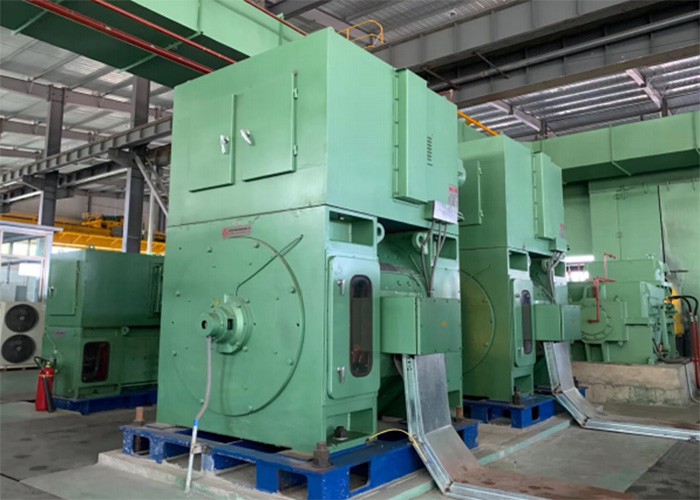
1. Reasonable selection of motor power
Select appropriate power according to rolling process requirements:
When selecting COLD MILL Motor, accurate calculations should be made according to the load requirements of the rolling process. It is usually necessary to consider the maximum load, dynamic load and overload capacity during rolling.
For example, for a reversible cold rolling mill, the motor needs to be able to withstand frequent starting and braking, so a motor with high overload capacity should be selected.
2. Use variable frequency speed regulation system
Application of variable frequency speed regulation system:
The variable frequency speed regulation system can adjust the speed and torque of the motor in real time according to the requirements of the rolling process, thereby avoiding long-term operation of the motor under high load.
For example, in the main drive of the cold rolling five-stand, the use of a frequency converter to control the speed and torque of the motor can effectively prevent overload.
3. Install overload protection device
The role of overload protection device:
Installing overload protection devices (such as thermal relays, overload relays, etc.) can monitor the current and temperature of the motor in real time. When the current or temperature exceeds the set value, the protection device will automatically cut off the power supply to prevent the motor from overloading.
For example, Y series rolling mill motors are usually equipped with overload protection devices to ensure that the motor can be shut down in time when overloaded.
4. Optimize rolling process parameters
Adjust rolling process parameters:
By optimizing rolling process parameters (such as rolling speed, rolling force, rolling temperature, etc.), the load of the motor can be effectively reduced.
For example, appropriately reducing the rolling speed or adjusting the rolling force can reduce the risk of motor overload.
5. Real-time monitoring and control
Install monitoring equipment:
Install current, voltage, temperature and other monitoring equipment to monitor the operating status of the motor in real time.
For example, by installing current sensors and temperature sensors, the current and temperature of the motor can be monitored in real time to detect abnormal conditions in time.
Automation control system:
Use an automation control system (such as PLC, DCS, etc.) to automatically adjust the operating parameters of the motor according to the monitoring data to ensure that the motor operates within a safe range.
For example, when it is detected that the motor current exceeds the set value, the automation control system can automatically reduce the speed or torque of the motor to prevent overload.
6. Regular maintenance and inspection
Regularly check the running status of the motor:
Regularly check the appearance, fasteners, lubrication, etc. of the motor to ensure that the motor is in good running condition.
For example, regularly check the lubrication of the motor bearings and replenish or replace the grease in time.
Check the electrical connection:
Regularly check whether the electrical connection of the motor is firm to avoid overloading the motor due to poor contact.
For example, check whether the terminal of the motor is loose and tighten it in time.
7. Operation specifications and personnel training
Formulate operation specifications:
Formulate strict operation specifications to ensure that operators operate in accordance with the specifications to avoid overloading the motor due to misoperation.
For example, it is stipulated that operators must check whether the equipment is in normal condition before starting the motor.
Personnel training:
Provide professional training for operators and maintenance personnel to make them understand the performance and overload protection measures of the motor.
For example, train operators on how to correctly use monitoring equipment and automatic control systems.